Why does display cover glass need 3A (AG, AR, and AF) coatings?
Struggling with screen glare and messy fingerprints? This makes high-quality displays hard to see. 3A coatings provide the perfect solution for a crystal-clear, user-friendly viewing experience.
Display cover glass needs 3A coatings—Anti-Glare (AG), Anti-Reflection (AR), and Anti-Fingerprint (AF)—to ensure clarity in any lighting condition. These coatings reduce glare, minimize reflections, and keep the surface clean, which greatly improves the overall user experience and device usability.
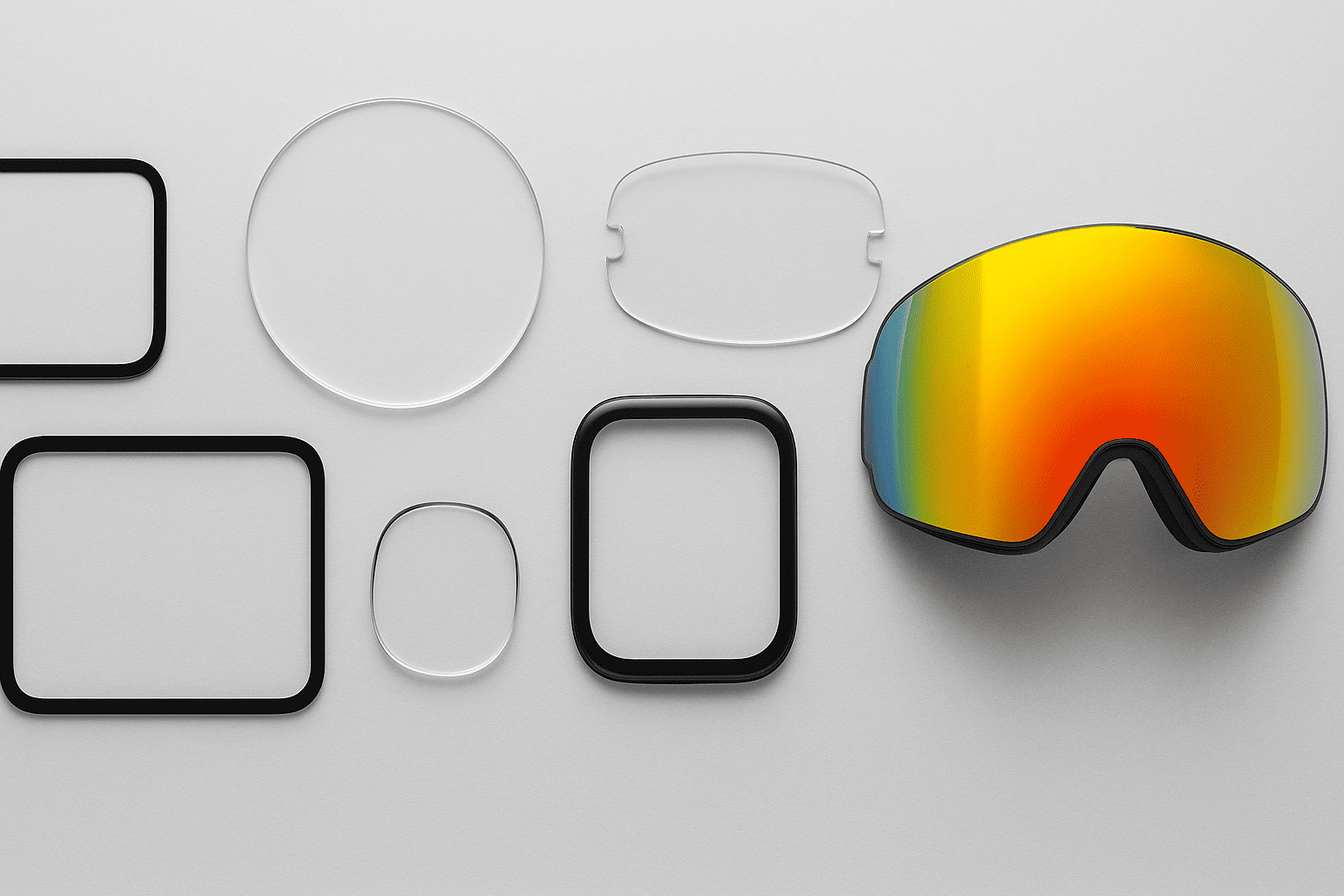
It's clear that these coatings are vital for a premium display. But what exactly do they do, and how do they work together to transform a simple screen into a perfectly clear interface? Let's break down each component to understand its unique role.
What exactly are AG, AR, and AF coatings?
Ever feel confused by display jargon like AG, AR, and AF? Choosing the wrong coating can waste time and money. Here’s a simple breakdown of what each one does.
AG (Anti-Glare) uses a matte finish to scatter harsh external light. AR (Anti-Reflection) uses multi-layer optical films to reduce reflection intensity. AF (Anti-Fingerprint) creates a smooth surface that repels oils and makes cleaning easy. Each solves a different visibility problem.
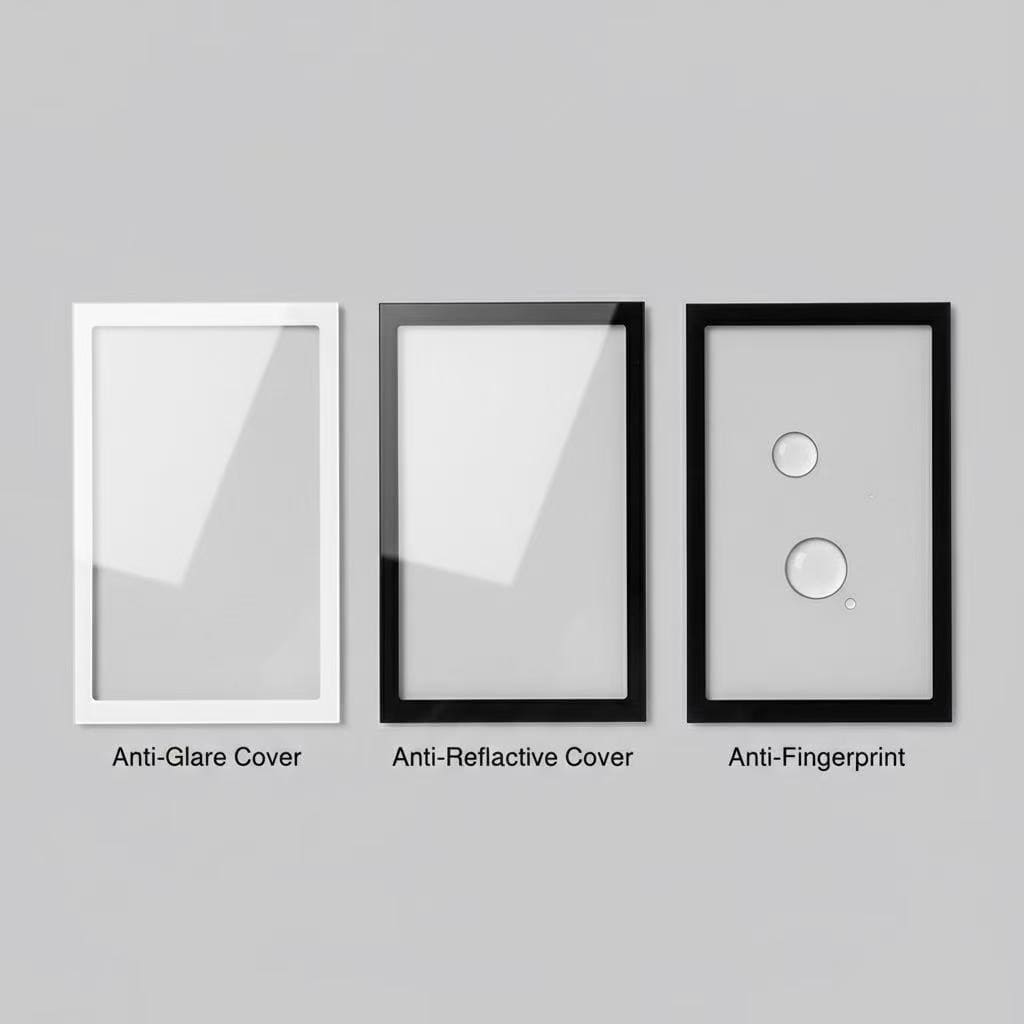
While all three coatings improve visibility, they solve different problems in unique ways. It's important for me to understand my client's specific application to recommend the right combination. Some products need all three, while others might only need one or two.
Anti-Glare (AG) Explained
An AG coating adds a microscopic texture to the display surface. This rough texture scatters ambient light, like sunlight or bright overhead lights, instead of reflecting it directly back at your eyes. This is great for devices used outdoors, but it can slightly reduce the sharpness of the image.
Anti-Reflection (AR) Explained
An AR coating is a bit more complex. It's made of multiple, ultra-thin layers of material deposited onto the surface. Each layer has a different refractive index. These layers are engineered to cancel out light waves as they reflect, which drastically reduces the amount of reflection you see. This preserves the screen's sharpness and color, making it ideal for high-resolution displays.
Anti-Fingerprint (AF) Explained
An AF coating, also known as an oleophobic coating, deals with smudges. It creates a very smooth, low-energy surface that oils and water can't easily stick to. This doesn't stop you from leaving fingerprints, but it makes them much less visible and incredibly easy to wipe clean. This is a must-have for any touchscreen device.
| Coating Type | Primary Function | How It Works | Best For |
|---|---|---|---|
| AG | Reduces glare from external light sources | Scatters light with a micro-etched surface | Outdoor displays, bright rooms |
| AR | Reduces direct reflections from the screen | Uses multi-layer films to cancel reflections | High-res screens, cameras |
| AF | Repels oil, water, and smudges | Creates a slick, low-energy surface | Touchscreens, handheld devices |
How do these 3A coatings improve the user experience?
A display that's unreadable in bright light can be incredibly frustrating. This leads to eye strain and a poor impression of your product. Here’s how 3A coatings directly help.
3A coatings dramatically improve user experience by ensuring screen readability in various environments. AG and AR coatings reduce glare and reflections, lessening eye strain. The AF coating keeps the screen clean, ensuring an uninterrupted and pleasant interactive experience, especially on touchscreens.

At the end of the day, a product is only as good as the experience it provides. I've learned that even the most advanced internal technology can be undermined by a poor display interface. That's why we focus so much on these surface treatments. They bridge the gap between a machine and a person.
Clarity in Any Environment
The most obvious benefit is clear viewing, no matter where you are. For an outdoor payment terminal or a GPS in a car, direct sunlight can make a normal screen totally useless. AG coatings scatter this harsh sunlight, while AR coatings handle the direct reflections of the sky or dashboard. This combination ensures the user can always see the information on the screen clearly and safely.
Reduced Eye Strain
When a screen is hard to read, people squint and constantly shift their position to find a better angle. This causes eye strain and fatigue. For professionals using medical monitors or industrial control panels for hours, this is a serious issue. By creating a stable, clear, and reflection-free image, our coatings allow for comfortable viewing over long periods, which improves focus and reduces errors.
Maintained Aesthetics and Functionality
A screen covered in fingerprints and smudges just looks bad. It makes a premium product feel cheap. An AF coating helps maintain that clean, new look. More importantly for touchscreens, a clean surface ensures that touch inputs are registered accurately. Smudges can sometimes interfere with the capacitive sensors, so a clean screen is a functional screen.
Can you apply these coatings to materials other than glass?
Glass offers superb clarity but is very fragile. In tough environments, this leads to broken screens and expensive downtime. We can solve this by coating durable plastics instead.
Yes, 3A coatings can be applied to plastics like Polycarbonate (PC)1 and PMMA (Acrylic)2. This is ideal for applications needing high impact resistance. By combining materials, like a PC-PMMA composite, we can achieve both durability and a high-quality, coated optical surface.
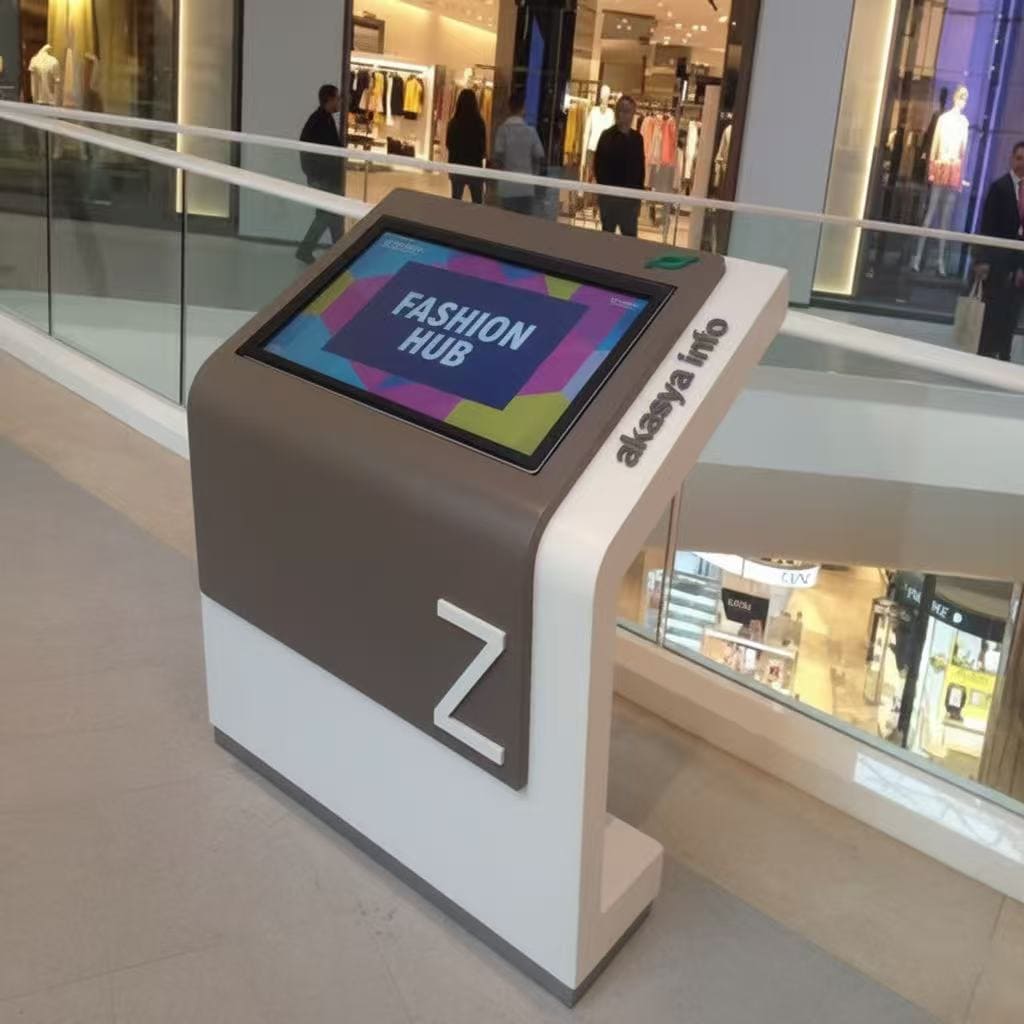
This is one of the areas where my team and I have really been able to help our clients innovate. Many people assume they have to choose between the toughness of plastic and the optical quality of glass. I love showing them that they can have both.
The Challenge: Durability vs. Optical Quality
Traditionally, there's a trade-off. Glass is hard and scratch-resistant but shatters. Plastics like Polycarbonate (PC) are incredibly impact-resistant, but they are soft and scratch very easily. This presents a dilemma for products used in public or industrial settings where they need to be both tough and easy to read.
A Real-World Example: The Singapore Bus Card Reader
I remember a client from Singapore who came to us with this exact problem. They manufactured card readers for public buses. Their original glass covers were constantly cracking due to vibrations and occasional impacts, leading to high maintenance costs. They switched to a simple PC cover, which solved the breakage problem, but after a few weeks in service, the screens were so scratched that they were hard to read.
Our VIIST Solution
I suggested a solution: a PC-PMMA composite board. We used PC for its core strength and impact resistance. Then we laminated a thin layer of PMMA (a harder plastic) to the front surface. We then applied a hard coating to the PMMA layer to bring its scratch resistance close to that of glass. Finally, we added the AG, AR, and AF coatings. The result was a cover lens that was nearly unbreakable, scratch-resistant, glare-free, and easy to clean. The client was thrilled, and they successfully solved a major field issue.
What challenges come with applying multiple coatings?
Applying multiple functional coatings isn't simple. One mistake in the process can cause defects and waste a lot of money. Here’s why expertise and environment are so important.
Applying multiple coatings requires precise control over each layer's thickness to avoid interference. It demands advanced equipment, like vacuum deposition chambers, and an extremely clean environment (like a Class 1000 cleanroom) to prevent dust from creating defects and ruining optical performance.
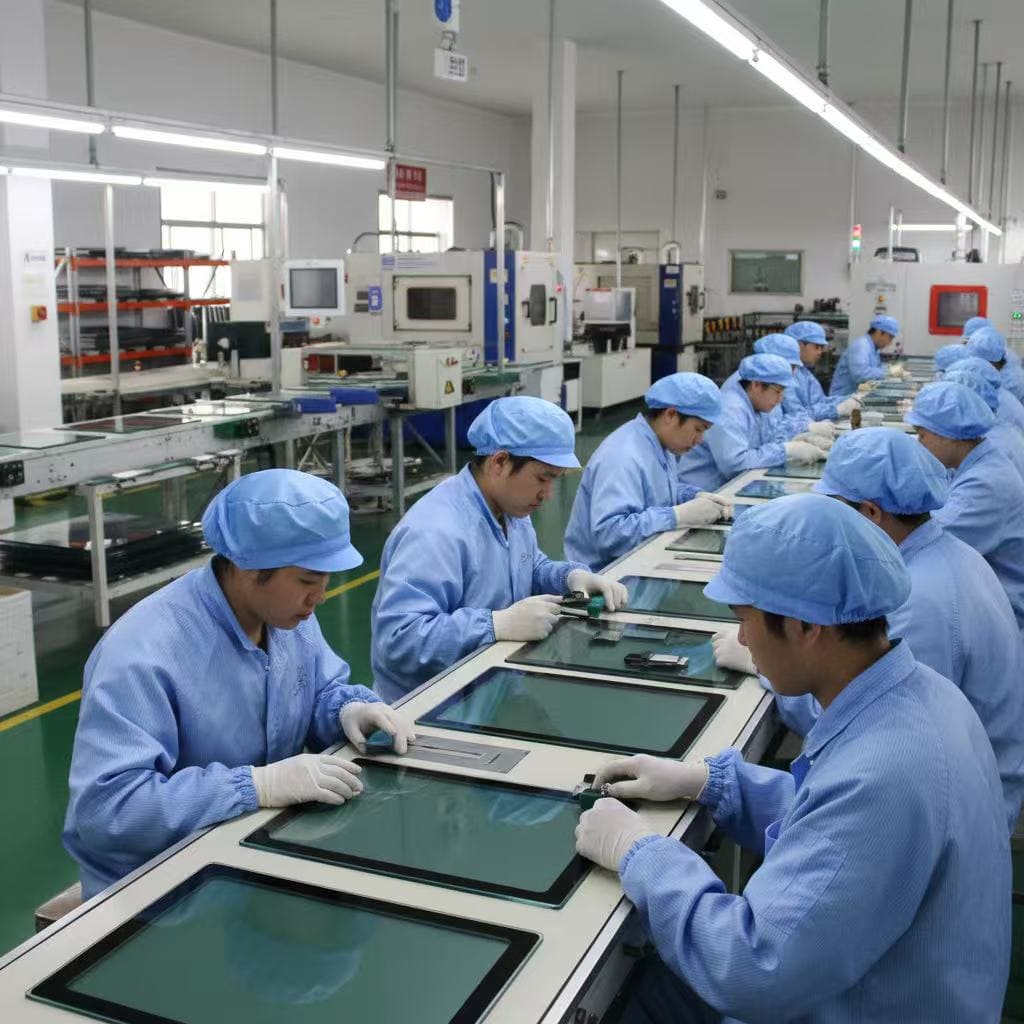
Having started my career in a manufacturing plant, I have a deep respect for the precision required in this work. It’s not just about having the right machines; it's about having the right processes and the right people who understand the science behind them.
The Importance of Material Compatibility
You can't just stack any coating on top of any material. There are complex issues of adhesion and thermal expansion. The manufacturer has to ensure that each coating layer will bond perfectly to the one below it, and to the base material. For our Singapore client, we had to carefully select a hard coat and 3A coatings that were all compatible with the PMMA surface. A poor combination could lead to peeling, cracking, or a hazy appearance over time.
Precision and Process Control
AR coatings, for example, are made of layers that are mere nanometers thick. If the thickness of any one layer is off by even a tiny fraction, it can change the color and reflective properties of the entire surface. This is why we use fully automated production lines and advanced vacuum deposition chambers. These systems provide the consistency and control needed to achieve the exact optical performance every single time. Manual application simply cannot achieve this level of precision.
The Critical Role of the Environment
For high-quality optical components, dust is the enemy. A single speck of dust that lands on a surface during the coating process can create a pinhole or a bump. This defect can ruin the entire part. That is why this work must be done in an extremely clean environment. We operate in Class 1000 cleanrooms, where the air is filtered to remove almost all microscopic particles. This is a non-negotiable requirement for producing the defect-free optical components our clients trust us to deliver.
Conclusion
3A coatings are vital for clear, durable displays. Combining them on the right material requires expert manufacturing, turning a good screen into a great one for any user.