How long does anti-fog coating really last? — Durability, testing, and real-world performance
You step into a warm room from the cold. Your goggles fog up instantly. You feel blind and frustrated. You need to understand how long anti-fog coatings truly last.
Anti-fog coating typically last from a few months to several years. The exact survival time depends entirely on your environment. High humidity and physical wiping destroy the layer faster. Mainstream hydrophilic coatings absorb moisture until they reach complete saturation. They slowly lose their clearing power over time.
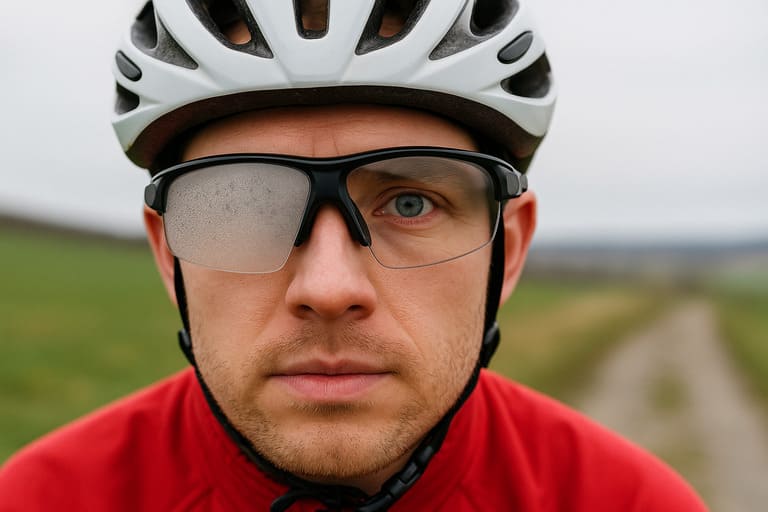
People expect an anti-fog coating to last forever on their masks. They feel angry when the coating stops working one day. I will show you the true science behind these chemical layers. I will explain our strict laboratory testing methods. Read the exact details below to discover the truth about your protective visors.
Why do your lenses fog up during winter?
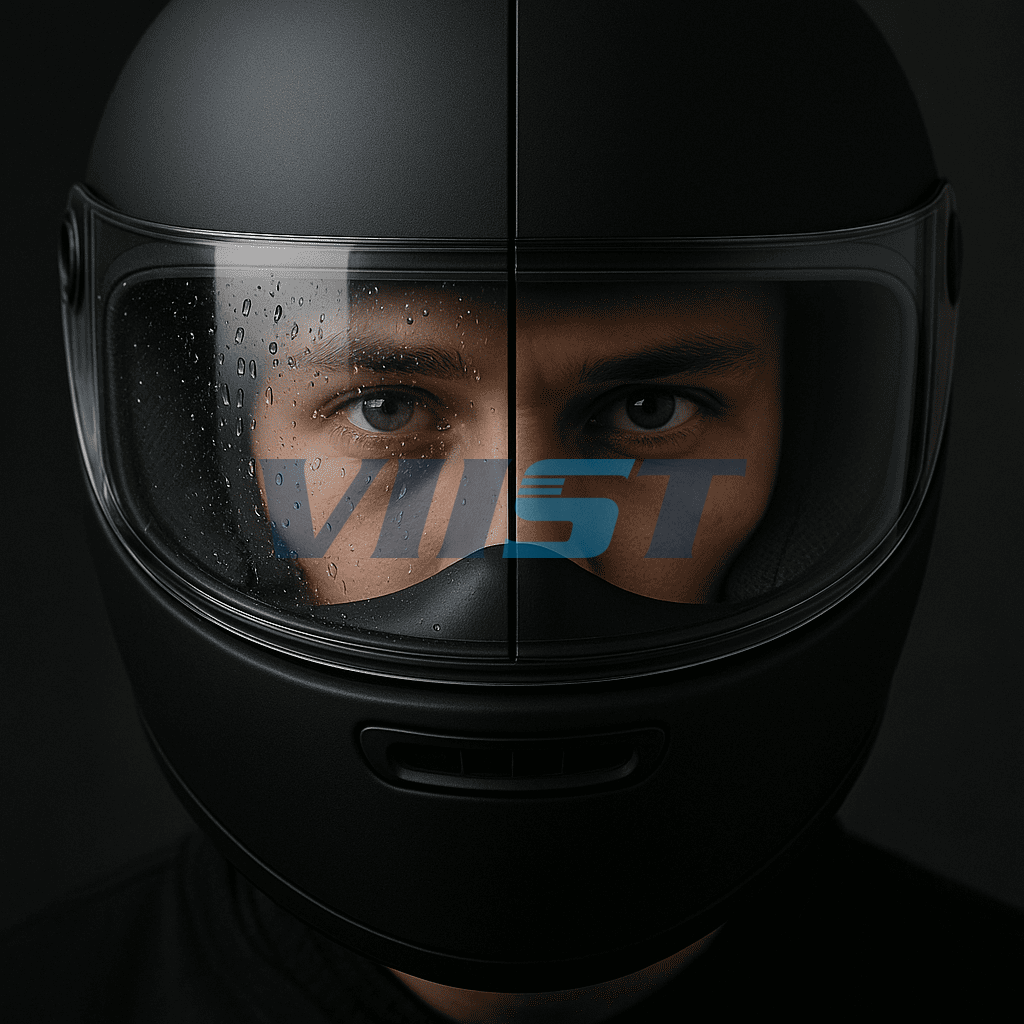
Your clear plastic screen turns perfectly white suddenly. You cannot see anything through the glass. You must understand the basic physics of water to stop this annoying problem.
Fogging happens when the substrate temperature falls below the air dew point. Water vapor condenses into tiny water drops. These small drops scatter the incoming light rapidly. This scattering causes the visual blur. Anti-fog coatings change how water behaves on the surface completely.
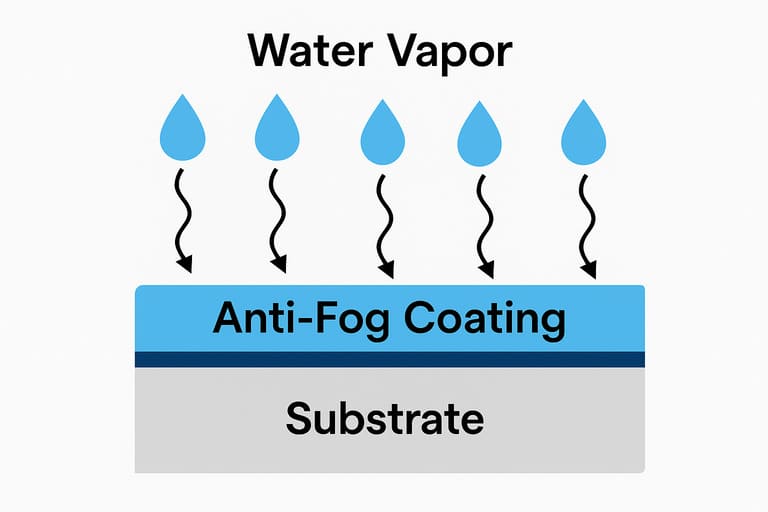
I see this fogging problem constantly at VIIST. We make precision optical polycarbonate components. Excellent vision remains critical for our safety equipment protection visors. We use two different chemical methods to fix this danger.
Most factories use hydrophilic coatings. This hydrophilic process is the mainstream method today. A hydrophilic coating loves water inherently. It forces the tiny water molecules to spread out completely. The drops flatten into one continuous flat water film. The light travels straight through this flat clear film without scattering. Your vision stays perfectly clear. The water drop angle stays between 10 degrees and 90 degrees. A super-hydrophilic coating has a tiny angle below 10 degrees.
Some companies try hydrophobic coatings. This hydrophobic method hates water. It makes the water form high round balls. The drops need strong gravity or wind to roll off. The contact angle stays very high between 90 degrees and 150 degrees. We rarely use this method. The product surface must be heavily tilted. Small nano-drops easily get stuck in the rough microscopic structure. Your product fails entirely in cold condensation conditions.
| Coating Type | How It Handles Water | Target Water Drop Angle | Practical Factory Use |
|---|---|---|---|
| Hydrophilic | Spreads water into a flat film | 10° to 90° | Very common, excellent daily clarity |
| Hydrophobic | Turns water into round balls | 90° to 150° | Rare, needs strong wind or steep angles |
Why do hydrophilic anti-fog coatings lose their power over time?
You buy a good anti-fog mask. It works flawlessly for several months. Then it starts fogging again. You must understand how heavy water saturation destroys the coating life.
Hydrophilic coatings fail because they absorb too much moisture over time. Continuous high humidity oversaturates the chemical structure. The surface energy drops heavily. The chemical layers swell up. The saturated coating cannot spread new water drops. The anti-fog effect degrades and eventually disappears completely.
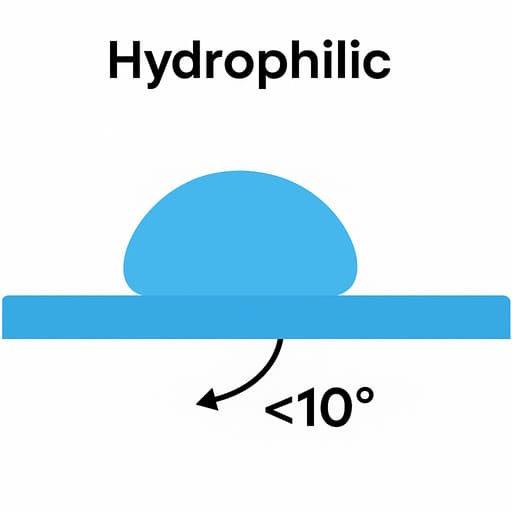
My clients often expect permanent anti-fog results. I tell them the hard truth immediately. Nothing lasts forever in wet environments. A hydrophilic coating acts exactly like a dry sponge. A dry sponge soaks up water perfectly. It keeps the kitchen counter dry. You keep pouring water on it. The sponge gets totally full eventually. It cannot take one single more drop. The water stays on the counter.
Your safety mask works the exact same way. The soft coating absorbs the daily moisture. Long-term exposure to high humidity ruins the chemical bonds. The thin layers swell up from the deep water inside. The core surface energy drops heavily. The coating reaches its total moisture limit. It stops turning new mist into a clear flat film. The new moisture forms tiny round drops on top. Those small drops scatter the light. Your vision becomes blurry again. We use advanced functional coating technologies at VIIST. We strengthen the chemical structure. We delay this swelling process. We improve the durability significantly. Yet, daily wiping and harsh environments will always shorten the total product lifespan.
| Lifecycle Stage | Coating State | Visual Result | Physical Meaning |
|---|---|---|---|
| New Product | Sponge is dry and ready | Perfectly clear vision | High absorption capacity |
| Middle Life | Sponge holds some water | Minor edge blur happens | Moisture builds up inside |
| End of Life | Sponge is fully saturated | Complete white fog returns | Needs complete replacement |
How do we test true anti-fog durability in the factory?
You want to trust your daily safety equipment. You cannot guess a blind lifespan. You need strict industrial testing to prove the actual coating survival time.
We use the strict HG/T 6270-2024 industry standard1. We test initial performance and long-term durability. We expose parts to cold temperatures and hot steam. We measure light transmittance and haze. We wipe the surface with strong ethanol. We run extreme hot and cold weather cycles.
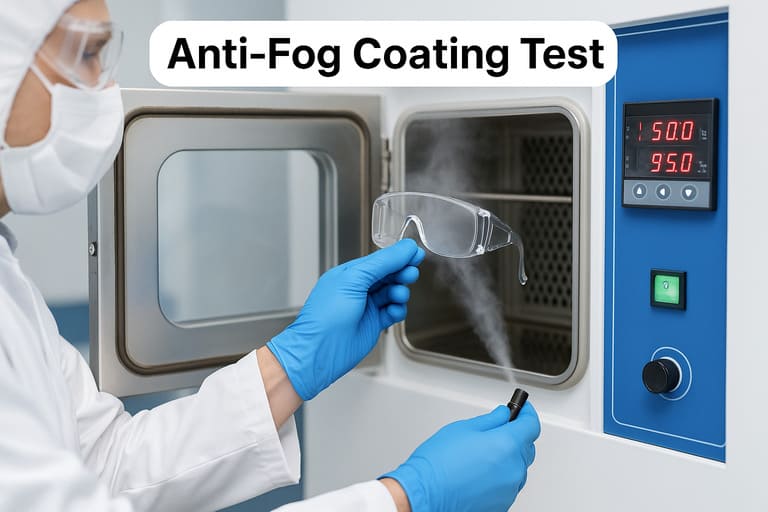
At VIIST, we measure anti-fog quality through core performance tests. We use optical tests and physical tests. We check paint adhesion with a cross-hatch test. We check pencil hardness. We rub the coating heavily to test daily wear resistance.
The true test is the hot steam cycle. We cool the sample down to 5 degrees Celsius. We put it perfectly in front of 40 degrees Celsius steam. We expose it for 30 seconds exactly. We record the light transmittance recovery rate. We measure the new haze increase. We run this exact cycle ten times for durability proof.
The Class I standard requires a 90 percent transmittance recovery rate. It allows less than a 3 percent haze increase. A Class I visor shows zero visible fog spots. The surface stays perfectly uniform. The Class II standard requires an 80 percent recovery rate. It allows a 5 percent haze increase. A Class II visor allows very slight fog spots. The light still passes through nicely.
| Test Metric | Class I Standard | Class II Standard | Visual Results |
|---|---|---|---|
| Transmittance Recovery | Higher than 90% | Higher than 80% | Clear vision vs minor blur |
| Haze Increase Limit | Lower than 3% | Lower than 5% | Zero spots vs slight spots |
| Steam Durability Test | 10 exact cycles | 10 exact cycles | Proves long-term daily life |
Where do we use these anti-fog components daily?
You see fog on many different glass items everywhere. High technology solves this problem globally. You must know which exact industries require total anti-fog protection daily.
Anti-fog coatings protect many critical items. We treat safety goggles, medical endoscopes, and car cameras. We coat solar panels to improve energy conversion. We coat greenhouse films for farming. We even treat simple daily bathroom mirrors. Clear vision saves lives and improves efficiency globally.
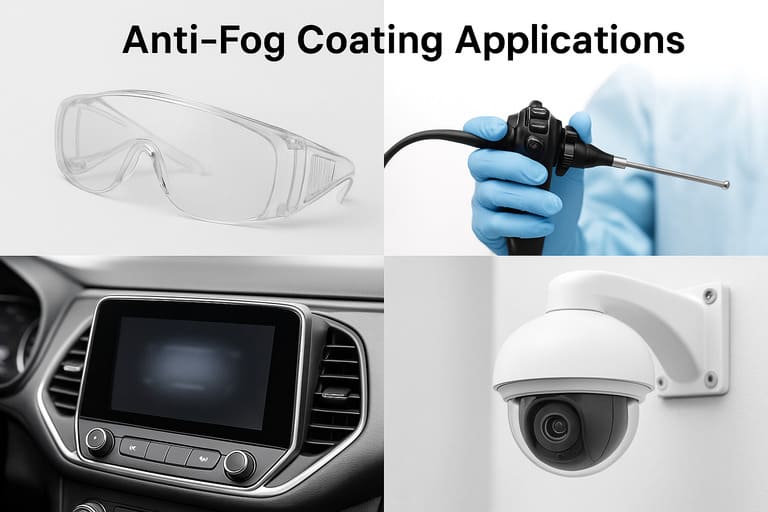
We produce optical polycarbonate items for clients in over 50 countries. Poor vision causes terrible accidents. Fog stops expensive machines from working properly. We provide functional coatings to many highly demanding industries.
Medical teams need absolute clarity. Doctors use optical endoscopes inside warm human bodies. Fog deep inside a patient is extremely dangerous. We deliver ultra-clear medical device covers to stop this. Drivers need clear roads during cold winter mornings. Foggy car headlights blind the drivers. We follow the strict ISO/TS 5385:2022 standard for vehicle parts. We coat car windshields and center displays. Security cameras face cold nights and warm mornings. The inside of the camera dome cover fogs up rapidly. We coat the inner surface to keep the police video clear.
Even farmers need our technical help. We coat large plastics for agricultural greenhouses. Fog blocks the warm sun. Plants die without enough daily sunlight. The thin anti-fog layer keeps the light shining through. Solar panels lose power when fog blocks the sun. We coat photovoltaic panels. This stops the cold condensation limit. This keeps the daily energy conversion rate very high.
| Industry Segment | Application Scene | Key Operational Benefits |
|---|---|---|
| Safety and PPE | Work goggles, visors, helmets | Prevents accidents, keeps vision clear |
| Automotive Tech | Bright headlights, windshields | Stops driving errors in the cold |
| Medical Devices | Surgical human endoscopes | Stops dangerous internal fog |
| Global Energy | Large outdoor solar panels | Keeps power generation high |
Anti-fog coatings absorb daily moisture to keep your vision completely clear. You must replace the equipment when the chemical coating saturates eventually. Quality factory testing ensures your safety products work perfectly from the start.
"Long-lasting and stable anti-fog coating combined with active ... - PMC", https://pmc.ncbi.nlm.nih.gov/articles/PMC12511366/. The cited source should identify HG/T 6270-2024 as an industry standard relevant to anti-fog coating performance or testing, supporting the article’s reference to a formal test framework. Evidence role: case_reference; source type: institution. Supports: HG/T 6270-2024 is a relevant industry standard for anti-fog coating testing.. Scope note: An official catalogue entry can establish the standard’s existence and scope, but the full test procedures and thresholds may require access to the standard text. ↩