Does Anti-Fingerprint Mean No Fingerprint? Here’s the Truth
You touch your new screen and see a smudge right away. You feel cheated by the anti-fingerprint label. You need to know how this coating really works.
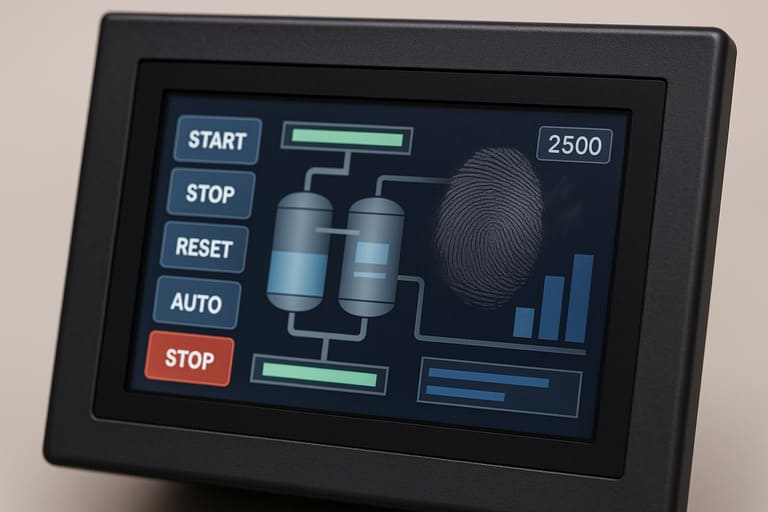
Anti-fingerprint(AF)coating does not mean your screen will never get fingerprints. The true purpose of an AF coating is to make fingerprints much easier to wipe off. It stops oil and sweat from sticking tightly to the surface.
Many people misunderstand this simple truth. I want to explain how this coating functions and how you can test it on your optical parts.
What exactly happens when you touch an AF coated surface?
Your finger leaves sweat and oil on the glass. The mark looks terrible and blocks your view. The coating changes how this oil behaves.
An AF coating changes the microscopic structure of the glass or polycarbonate. It does not make the oil disappear. Instead, it prevents the oil from soaking into the surface. The fingerprint stays on top, so a quick wipe removes it completely.
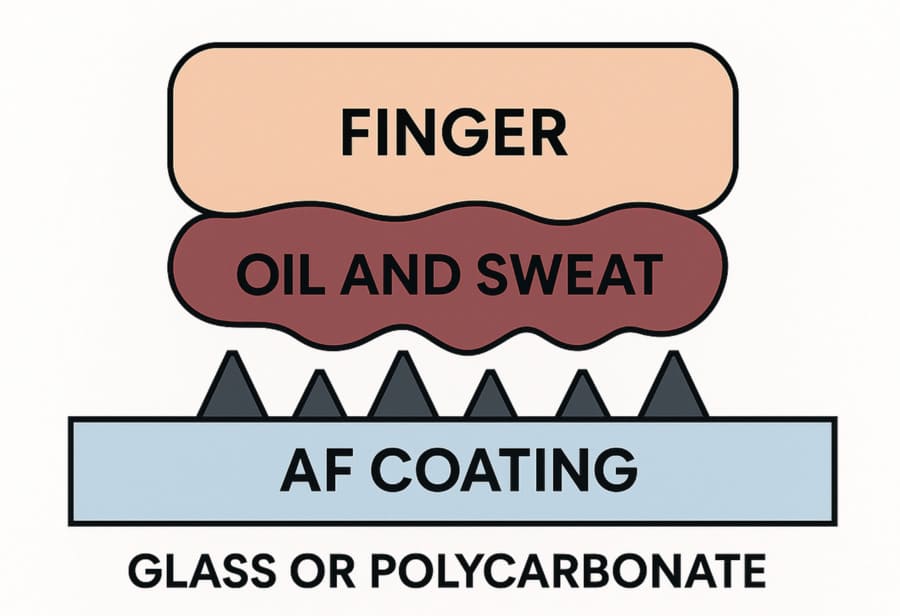
Many clients receive sample optical polycarbonate components from our factory. They press their finger on the display cover glass right away. They see a visible fingerprint mark. They contact me immediately. They say the coating quality is bad. This reaction is a very common misunderstanding. I always explain how the AF coating alters the microscopic structure of the surface. The coating does not destroy the oil from your skin. Human skin produces sweat and oil constantly. The AF coating simply creates a barrier. It acts like a non-stick pan in your kitchen. The dirt sits on the top layer softly. The oil cannot bond with the polycarbonate or glass material underneath. You do not need strong chemicals to clean the screen. You just need a soft cloth. You wipe the screen once. The mark goes away instantly. This easy cleaning is the true value of the anti-fingerprint technology.
| Surface Condition | Oil Grip | Cleaning Effort | Result After Wipe |
|---|---|---|---|
| Normal Polycarbonate | Strong | High | Smudges remain |
| AF Coated Display | Weak | Very Low | Completely clean |
How do you use the water drop angle1 to measure AF quality?
You cannot just guess if the coating is good. You need a real standard to check the quality. The water drop angle provides this exact measurement.
The water drop angle test is the most direct way to measure AF coating quality. A larger angle means the surface repels water and oil better. Good AF coatings reach an angle of 110 degrees to 120 degrees or higher.
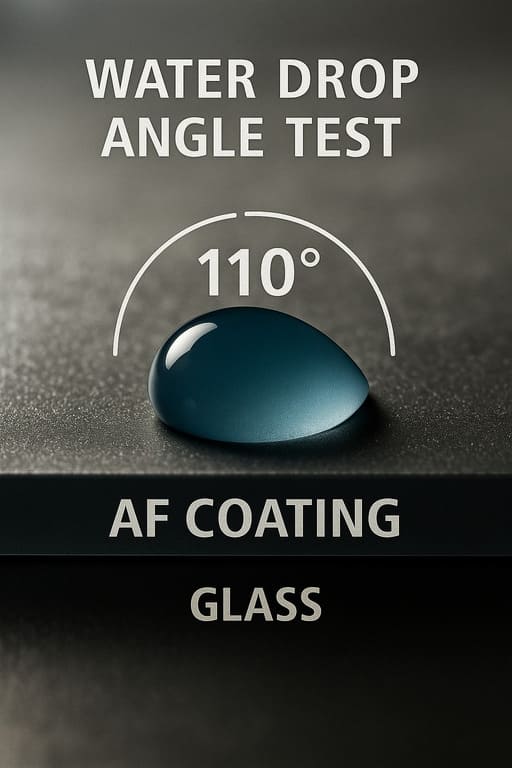
We manufacture precision optical polycarbonate components at VIIST. We must guarantee our quality. The water drop angle test is the most direct way to measure the AF coating quality on our products. A normal glass or polycarbonate surface absorbs water easily. The water drop angle on a normal surface usually stays around 30 degrees to 50 degrees. We apply our functional coatings using our advanced production lines. A good AF coating pushes that water drop angle up to 110 degrees or higher. This large angle proves that the surface repels water and oil very well. The large angle means oil and sweat struggle to stick to the camera dome cover or helmet visor. The liquid beads up instead of spreading out flat. We established strict quality standards for these exact numbers. We test every batch of windproof goggles before we ship the items to our global clients.
| Surface Type | Water Drop Angle | Liquid Shape | Protection Level |
|---|---|---|---|
| Normal Glass | 30° to 50° | Spreads flat | Low |
| Standard AF Coating | 90° to 100° | Forms a dome | Medium |
| Good AF Coating | 110° to 120° | Forms a high ball | Maximum |
How can you easily test the AF coating at home or work?
Professional testing machines cost a lot of money. You might not have one in your office. You can still test the surface with simple items.
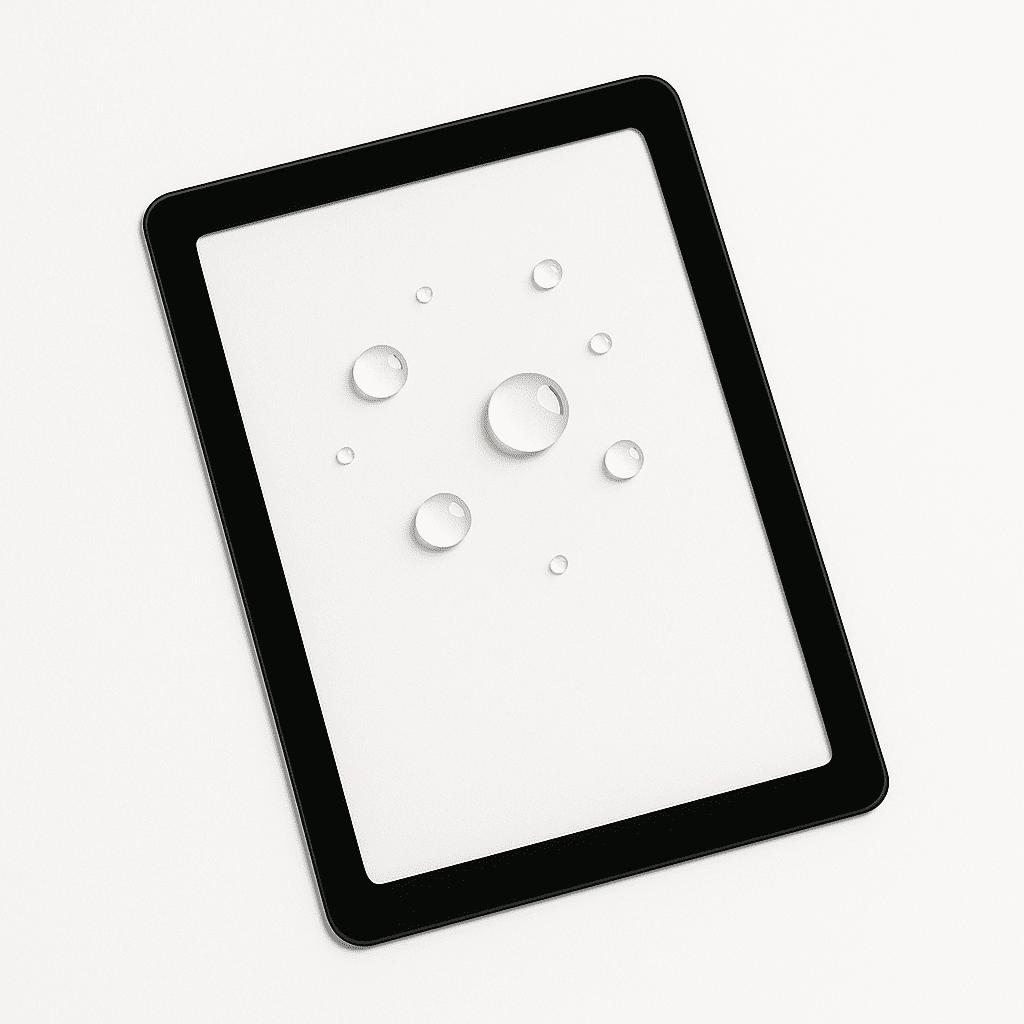
You can test an AF coating by dropping a single drop of water on the surface. A good coating makes the water look like a full round ball that rolls off easily. A bad coating makes the water flatten out.
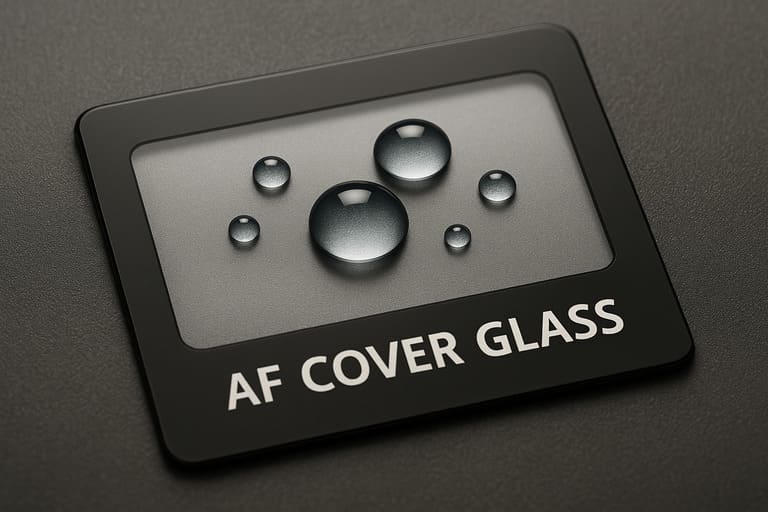
You might not own a professional water testing machine. I tell my clients they do not need expensive tools to do a basic daily check. You can use a much simpler method to test the AF coating effect yourself. You place the display cover glass on a flat table. You take some clean water. You drop one single drop of water directly onto the test surface. You must watch the shape of the water very closely. The water drop forms a very full round ball if the AF coating works well. You gently shake the glass. The water ball rolls off quickly without leaving a wet trail. A bad or worn coating creates a completely different result. The water flattens out on a bad coating. The edges of the water drop soak the screen surface. This simple visual test tells you everything you need to know about the current state of your protective visor.
| Test Result | Shape of Water | Movement | Coating Status |
|---|---|---|---|
| Full round ball | High and tight | Rolls off instantly | Excellent AF coating |
| Flat water shape | Low and wide | Leaves water marks | Bad or worn coating |
AF coating does not make fingerprints vanish magically. The coating makes fingerprints very easy to wipe away. You can use a simple water drop test to check your screen quality anytime.
"[PDF] Dynamic Contact Angle on a Surface with Gradient in Wettability", https://docs.lib.purdue.edu/cgi/viewcontent.cgi?article=2805&context=iracc. A surface-science source on contact-angle measurement can substantiate that the angle formed by a liquid droplet on a solid surface is a standard measure of surface wettability, with higher contact angles indicating lower wetting and greater liquid repellency. Evidence role: definition; source type: education. Supports: The water drop angle test is a direct way to assess AF coating quality because it measures how strongly a surface repels liquid; a larger angle indicates better repellency.. Scope note: Contact angle directly measures wettability for a test liquid such as water; claims about fingerprint oil repellency may require additional evidence using oil-contact-angle or oleophobicity tests. ↩