
ESD Plastic Sheet Sourcing: Why Coating and Machining Should Come from One Supplier?
Your ESD coating cracks after bending completely. Your supplier blames the other supplier instantly. You lose the entire expensive batch and nobody takes responsibility.
ESD plastic sheets require precise coordination between anti-static coating and CNC machining. Getting the process order wrong causes total coating failure. You must use one single supplier who controls the full workflow from coating to cutting to bending to guarantee real static dissipation.
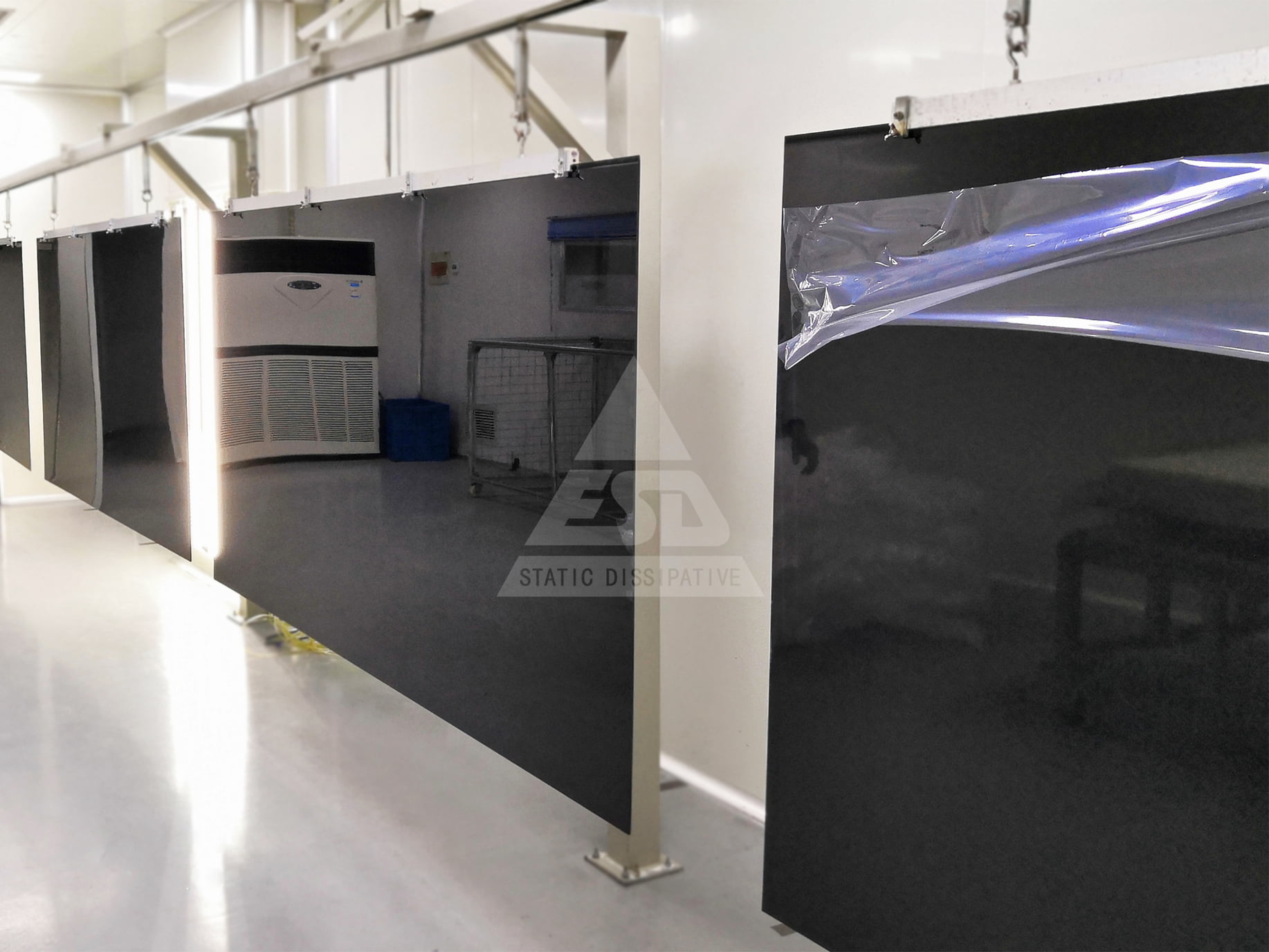
I have watched too many frustrated engineers throw away entire batches of cracked ESD panels. The coating supplier blames the machining shop. The machining shop blames the coating supplier. You pay for everything twice. I will explain exactly how to avoid this expensive disaster below.
What exactly defines a true ESD plastic sheet and why do most buyers get the standard wrong?
You buy a sheet labeled "anti-static" confidently. You install it in your cleanroom proudly. A hidden static discharge destroys your expensive wafer silently. Your so-called ESD sheet was actually an insulator.
A true ESD static dissipative material must have surface resistivity between 10⁵ and 10¹² Ω/sq, or surface resistance between 10⁶ and 10⁹ Ω. Insulating materials above 10¹¹ Ω trap electric charges permanently and never discharge them safely.

Most buyers I meet only remember one number. They say "ten to the sixth to ten to the eighth." They think that covers everything. It does not. The Chinese industry standard SJ/T 10694 clearly separates materials into four strict categories1. You must understand all four to buy correctly.
Conductive materials sit at the very low end. They move charges extremely fast. Shielding materials block external electric fields directly. Static dissipative materials sit in the middle range. They drain charges slowly and safely. Insulating materials sit at the high end. They trap charges completely. They never let the charge escape at all. That trapped charge waits quietly on the surface. One day it discharges violently. It punches straight through your sensitive PCB or sensor chip instantly.
How do you read the datasheet correctly?
You must check three specific things on every supplier datasheet firmly. First, check the exact parameter name. Surface resistance and surface resistivity are two different measurements entirely. Second, check the unit. Ohms (Ω) measures resistance directly. Ohms per square (Ω/sq) measures resistivity across a surface area. Third, check the test method reference.
| ESD Material Category | Surface Resistivity Range | Charge Behavior |
|---|---|---|
| Conductive | Below 10⁵ Ω/sq | Moves charge extremely fast |
| Static Dissipative | 10⁵ to 10¹² Ω/sq | Drains charge slowly and safely |
| Insulating | Above 10¹² Ω/sq | Traps charge permanently on surface |
Why does bending ESD coated plastic sheets fail so badly for most buyers?
You design a beautiful curved cleanroom cover confidently. The factory bends your ESD sheet roughly. The anti-static coating cracks silently. You install a part that looks perfect but is actually a dangerous insulator.
ESD acrylic sheets crack entirely during any bending due to their brittle base material. ESD polycarbonate sheets can bend safely only if the specific coating formula supports bending. You must confirm "bending grade" or "thermoformable" on the exact datasheet.
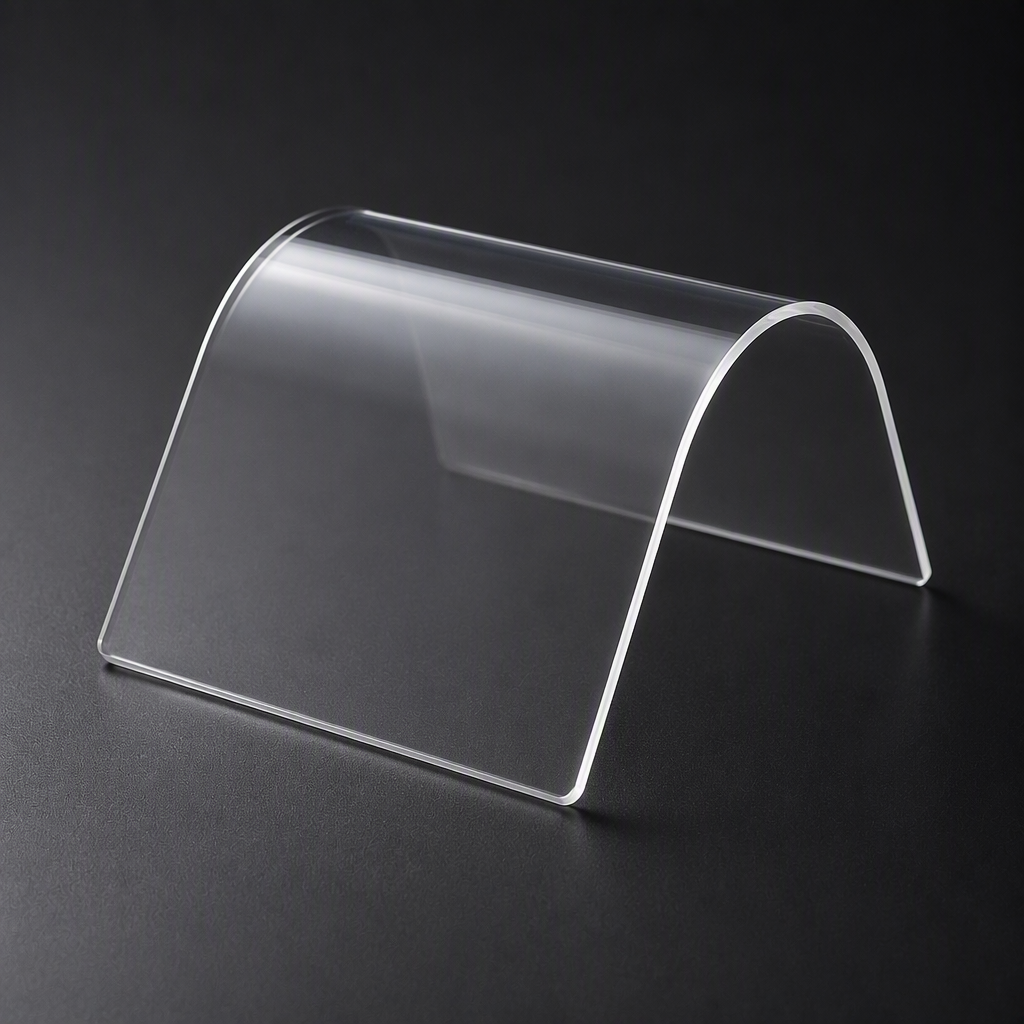
I must be very direct with you here. If your design includes any bent parts, curved covers, or shaped windows, do not pick acrylic at all. ESD acrylic (PMMA) has a naturally brittle base. The anti-static surface coating makes it even more rigid. When you try to hot bend or cold bend acrylic, the coating cracks into tiny white lines immediately. The edges turn white. Sometimes the entire sheet snaps in half completely. There is no workaround for this physical limitation.
ESD polycarbonate (PC) handles bending much better naturally. Polycarbonate is flexible and tough by nature. But you still face a serious hidden trap directly. Many standard ESD PC sheets on the market use filled-type or rigid hard-coat formulas. These rigid coatings crack during bending exactly like acrylic coatings. The coating splits at the bend line silently. Your surface resistance jumps from the safe dissipative range straight into the dangerous insulating range instantly. The part looks perfectly fine to your eyes. But the bend line is now a dead zone. It traps charge permanently.
How do you identify a truly bendable ESD PC sheet?
| Datasheet Indicator | What It Tells You | Your Action |
|---|---|---|
| "Bending grade" label | Coating formula stretches safely | Safe to bend at specified angles |
| "Thermoformable" label | Coating survives hot forming | Safe for curved enclosure shapes |
| No bending mention at all | Coating will likely crack | Do not bend this sheet ever |
| Specified bend radius and temperature | Factory tested exact limits | Follow these limits precisely |
Always ask your supplier for the exact minimum bend radius and the exact forming temperature window before you place any order. If the supplier cannot provide these two numbers directly, the sheet is almost certainly not bendable safely.
Should you coat first or machine first — and why does getting this wrong destroy entire batches?
You coat the flat sheet perfectly first. The factory cuts the edges sharply. The exposed raw edge has zero ESD protection. Static charge builds up exactly at your mounting surface quietly.
There is no single correct universal answer. The right process sequence depends entirely on your specific part geometry. A flat window needs coating first then cutting. A bent cover might need bending first then coating. Only one experienced supplier can judge this correctly.

This exact question causes the most expensive failures I see in our industry constantly. Let me break down all three common sequences honestly. Every single one has a serious weakness.
Sequence A: Coat first, then CNC cut edges. The CNC blade cuts through the coating cleanly. The edge now exposes raw uncoated polycarbonate directly. This bare edge has zero static dissipation protection. For cleanroom windows and equipment covers, the edges are the mounting surfaces. They press against metal frames tightly. They experience the most friction during installation. They generate the most static charge. But they have absolutely no coating protection at all.
Sequence B: Coat first, then bend. The coating stretches at the bend line. Micro-cracks form invisibly across the entire bend. You cannot see these tiny cracks with your naked eyes. But a surface resistance meter shows the truth brutally. The bend area reads as a full insulator. You just built a part that pretends to be ESD safe but is actually dangerous.
Sequence C: Machine first, then coat. This sounds logical initially. But coating complex shaped parts is extremely difficult physically. Spray coating or dip coating cannot cover inside corners, tight bend radii, and drilled holes uniformly. The inside radius of a bent part always gets too thin a coating layer. The ESD performance drops severely exactly where you need it most.
What is the real solution?
| Part Geometry | Recommended Sequence | Technical Reason |
|---|---|---|
| Flat window with cut edges | Coat → CNC cut → Edge seal | Seals exposed edges after cutting |
| Bent cover or curved shield | Bend first → Coat entire part | Avoids coating crack at bend line |
| Complex shape with holes | Coat → Machine → Spot repair | Repairs coating at machined areas |
You need one single factory that understands the full process chain completely. That factory reviews your drawing before production starts. They check your bend radius. They check your operating environment temperature and humidity. They check what cleaning chemicals you use daily. Then they design the exact right process sequence backwards from your final requirements. At VIIST, we control coating and CNC machining inside one facility. We decide the process order before we touch your material. We take full responsibility for the final ESD performance entirely. No finger pointing between two separate suppliers ever.
Where are ESD plastic sheets actually used beyond simple cleanroom windows?
You think ESD sheets only cover cleanroom observation windows. You miss massive business opportunities completely. ESD plastic sheets protect billions of dollars in sensitive electronics across dozens of industries daily.
ESD polycarbonate and acrylic sheets serve semiconductor fabs, medical cleanrooms, precision optical instruments, automated warehouses, and military avionics equipment. Static discharge is a hidden killer in every high-speed automated environment constantly.
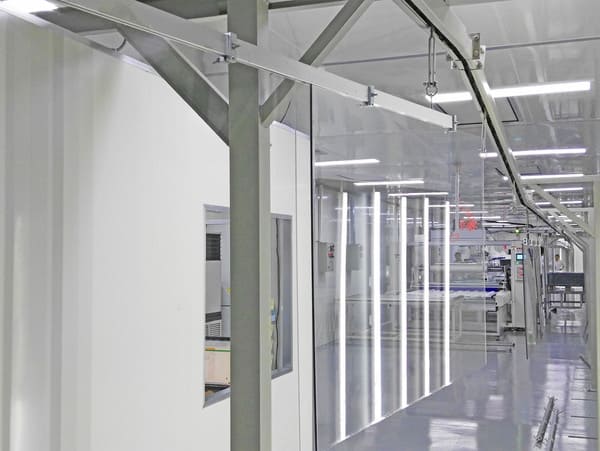
I want to open your eyes to the true scope of this market completely. Cleanroom windows represent maybe twenty percent of total demand. The remaining eighty percent comes from industries you might never expect.
Semiconductor and electronics manufacturing uses the most ESD plastic sheets globally. Wafer carrier windows, equipment protective covers, test fixture panels, SMT production line dividers, and fab observation windows all require strict static dissipation. These parts must also have extremely low outgassing. The plastic must not release any chemical particles that could contaminate a silicon wafer. This dual requirement of ESD safety and low particle emission makes material selection very demanding.
Medical and biotech facilities use ESD sheets for cleanroom equipment housings and pharmaceutical filling line barriers. Static attracts dust and airborne particles like a magnet. An ESD sheet reduces particle adhesion dramatically. These medical sheets must also survive repeated wiping with alcohol and harsh disinfectants without losing their coating integrity.
Precision instruments and optical equipment split between the two materials naturally. ESD acrylic offers above ninety percent light transmission for optical inspection windows. ESD polycarbonate provides impact strength two hundred and fifty times stronger than glass for equipment guards near mechanical collision risks.
Automated warehouses and logistics need ESD transparent panels for component turnover boxes and automated storage system barriers. In high-speed robotic environments, a single invisible static discharge can cause hidden latent damage to an entire batch of sensitive electronic components silently.
Which ESD material fits which industry?
| Industry Sector | Primary ESD Plastic Choice | Key Extra Requirement |
|---|---|---|
| Semiconductor Fabs | ESD PC or ESD Acrylic | Ultra-low outgassing emission |
| Medical Cleanrooms | ESD PC | Chemical solvent wipe resistance |
| Optical Instruments | ESD Acrylic | Maximum light transmission above 90% |
| Automated Warehouses | ESD PC | High impact strength for robotic zones |
| Military Avionics | ESD PC | MIL or GJB standard compliance |
Stop splitting your ESD sheet orders across multiple disconnected suppliers. One integrated factory controlling coating and machining together guarantees real static dissipation, zero finger pointing, and dramatically lower total cost.
---"JSC-66552BASELINE.pdf", https://standards.nasa.gov/sites/default/files/standards/JSC/Baseline/0/JSC-66552BASELINE.pdf. The source provides an overview of the Chinese industry standard SJ/T 10694, detailing the classification of materials based on their static properties. Evidence role: general_support; source type: government. Supports: The Chinese industry standard SJ/T 10694 clearly separates materials into four strict categories.. Scope note: The source may not provide a comprehensive analysis of the standard's implications for all industries. ↩